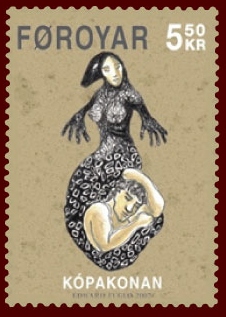
Selkies: The Shapeshifting Lover Legends of Northern Europe
Have you ever delved into the rich tapestry of Northern European folklore, where magical beings roam ancient lands? Perhaps you've heard tales of elusive tricksters guarding pots of gold, like the Irish
leprechaun, or perhaps chilling warnings of wailing specters, the formidable banshee. Yet, among these captivating myths, few resonate with the poignant romantic tragedy and deep mystery of the Selkie. These enigmatic seal-folk, found in the folklore of Scotland, Ireland, the Faroes, and Iceland, offer a unique narrative of love, longing, and the irresistible call of the sea, distinguishing them from other supernatural figures like the changeling.
The Enigmatic Nature of Selkies: Between Land and Sea
Selkies, often known as "silkies" or "seal wives," are quintessential shapeshifters. Their essence lies in their ability to transition seamlessly between two worlds: the icy depths of the ocean as a seal and the human realm as a person. This transformation is elegantly simple yet profoundly impactful: by shedding their sealskin, they become human, capable of walking on land, experiencing human emotions, and forming terrestrial bonds. Conversely, donning their skin again returns them to their aquatic home and true form.
This dual existence is not merely a party trick; it's the core of their mythology. Selkie stories frequently explore themes of identity, belonging, and the inherent tension between two vastly different ways of life. For a Selkie, their skin is more than just a covering; it is their very being, their freedom, and their connection to their original world. It is a potent symbol that drives many of their most heartbreaking narratives.
Romantic Tragedies: Love, Loss, and the Hidden Skin
The heart of Selkie lore beats with tales of romance, often tinged with profound tragedy. These stories frequently revolve around a human falling in love with a Selkie, or vice-versa. The dynamic often mirrors that of the classic "Swan Maiden" archetype, where a human discovers a magical being's true identity and then, through fascination or manipulation, seeks to keep them in the human world.
A common motif involves a human finding and hiding a Selkie's discarded skin. Without their skin, the Selkie is trapped in human form, unable to return to the sea. This act, while perhaps born of love and a desperate desire to keep their beloved close, becomes a prison. The Selkie, longing for the ocean, might marry their human captor and even bear children, living a life that is outwardly happy but inwardly filled with sorrow and yearning. The poignant line, "
Once a Selkie finds its skin again, neither chains of steel nor Chains of Love can keep her from the sea," perfectly encapsulates this deep-seated yearning for their natural habitat. When the skin is eventually found, often by one of their children, the Selkie invariably returns to the sea, leaving behind a heartbroken human family, a powerful testament to the unbreakable bond between a Selkie and their ocean home. These narratives serve as allegories for incompatible loves, the futility of trying to control another's destiny, and the pain of ultimate sacrifice.
Distinguishing Selkies from Other European Folkloric Beings
While Selkies enchant with their beauty and tragic love stories, it's crucial to understand how they differ from other supernatural figures populating European folklore. The spectrum of mythical beings is vast, ranging from the benevolent to the malevolent, and each holds a unique place in cultural narratives.
Consider the
changeling, for instance. A changeling is a substitute left by supernatural beings—often fairies, trolls, or demons—when they kidnap a human. These substituted creatures, sometimes described as a magically animated piece of wood or a supernatural being made to resemble the stolen human, typically exhibit disturbing traits. They might appear sickly, fail to grow like normal children, possess uncanny intelligence, or display unusual behaviors when they believe they are alone, such as dancing or playing instruments. The folklore surrounding changelings, particularly prevalent in Ireland and Scandinavia, often served as a somber explanation for childhood developmental conditions like autism or other disabilities. Some scholars even suggest these tales reflect a grim historical reality in pre-industrial Europe, where families struggled to support non-productive members, with changeling stories perhaps rationalizing practices like infanticide. Unlike Selkies who choose (or are coerced) to interact with humans, changelings represent a clandestine act of exchange, often with sinister implications for the human family.
While we've briefly touched upon the leprechaun as a mischievous gold-hoarding fairy and the banshee as a mournful harbinger of death, it is the distinct nature of the Selkie's shapeshifting, its romantic entanglement, and the profound internal conflict of belonging that truly sets it apart. Selkies are not deceivers like many changelings, nor are they inherently malevolent or benevolent like many fairies or banshees; they are beings caught between worlds, whose human interactions often lead to sorrow rather than malice. For a deeper dive into the broader context of these fascinating entities, read more about
Unveiling European Folklore: Changelings, Selkies & Ancient Myths.
Selkies in Modern Culture and Interpretation
The enduring appeal of Selkie legends transcends their ancient origins, finding new life and interpretation in contemporary media. From literature to film and music, the Selkie narrative continues to captivate audiences, drawing them into its themes of forbidden love, the clash between nature and civilization, and the search for one's true home.
Modern retellings often emphasize the psychological depth of these myths. The Selkie's longing for the sea can be seen as a metaphor for an individual's innate desire for freedom, for a place where they truly belong, or for an authentic self that cannot be contained by societal expectations or human desires. The hidden skin becomes a powerful symbol of identity, vulnerability, and the ultimate choice between two paths. Films like "The Secret of Roan Inish" beautifully portray the mystical allure and the melancholic reality of these beings, reminding us that some bonds, whether to a place or a nature, are simply unbreakable. These stories resonate because they tap into universal human experiences: the bittersweet nature of love, the pain of letting go, and the eternal pull of the wild within us.
Furthermore, the Selkie myth can also be interpreted through an ecological lens, highlighting humanity's often complicated and sometimes destructive relationship with the natural world. The idea of "trapping" a Selkie, forcing it to live a human life, can be seen as a metaphorical reflection of how humanity often seeks to control, exploit, or domesticate nature, often with tragic consequences for both parties.
Conclusion: The Timeless Allure of the Shapeshifter
From the playful trickery of the leprechaun and the unsettling mystery of the changeling to the haunting cry of the banshee, European folklore is rich with creatures that reflect human hopes, fears, and understandings of the world. Yet, the Selkie stands out with its uniquely poignant narrative of shapeshifting love. These legends are more than just old stories; they are profound explorations of identity, belonging, and the often-painful choices inherent in love between disparate worlds. As we continue to navigate complex relationships and our own longing for belonging, the tales of the Selkies offer a timeless reflection on the beautiful, wild, and often tragic nature of the human heart, forever tethered to the call of its truest home.